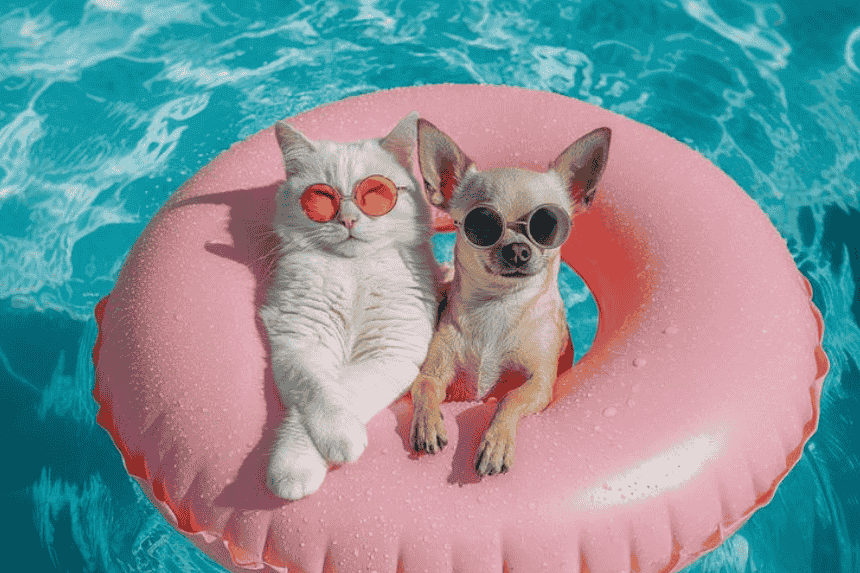
Summer is fun for us—vacations, cold drinks, sunshine—but for pets, it can feel like walking around in a fur coat under the blazing sun. Pet summer care isn’t optional; it’s essential. Just like humans, pets struggle with extreme heat, dehydration, and exhaustion. The difference? They can’t tell us when it’s too much.

Pets don’t sweat the way humans do. Dogs rely mostly on panting, and cats are masters at hiding discomfort. Add humidity, hot surfaces, and reduced airflow, and summer becomes a real test for their health.
Heat stress happens when your pet’s body temperature rises faster than it can cool down. Left unchecked, it can lead to heatstroke—a life-threatening condition. That’s why proactive summer care is non-negotiable.

Dogs love outdoor play, but summer heat can turn that joy into danger quickly. Breeds with thick coats, short noses (like pugs and bulldogs), and dark fur are especially vulnerable.
Cats appear chill, but they’re sensitive to heat too. They may sleep more, groom excessively, or avoid food during hot days. Indoor cats need cooling just as much as outdoor explorers.
Excessive panting or drooling
Lethargy or weakness
Vomiting or diarrhea
Bright red gums
Collapse or seizures
Difficulty breathing
Unresponsiveness
If you notice these, don’t wait—get veterinary help immediately.
Water is life, especially in summer. Dehydration sneaks up fast, and pets need constant access to clean, cool water.
Place multiple water bowls around the house
Add ice cubes to water
Use pet water fountains
Offer water-rich foods like watermelon (pet-safe portions)
Light, easily digestible meals are best. Wet food helps with hydration, while fresh veggies (approved by vets) can provide cooling benefits.
Avoid heavy, oily foods. Never give chocolate, grapes, onions, or spicy leftovers. Summer stomach upsets are real.
Regular brushing removes dead fur and improves airflow to the skin. It’s like opening windows in a stuffy room.
Not always. A pet’s coat protects them from sunburn and heat. Consult a groomer or vet before shaving.
Once every 2–4 weeks is usually enough. Overbathing strips natural oils and causes skin irritation.
Dry your pet thoroughly after baths. Moist skin plus heat equals bacterial trouble.
Aim for 22–26°C. Fans, AC, and proper ventilation help immensely.
Cooling mats
Damp towels
Frozen treat toys
Think of these as your pet’s summer survival kit.
Early morning or late evening—when the sun is gentle and pavements are cooler.
If the ground is too hot for your hand, it’s too hot for paws. Booties or shaded paths help.
Short walks, indoor play, puzzle toys—keep activity light and fun.
Panting isn’t a badge of honor. If your pet looks tired, stop immediately.
Summer is peak season for parasites. These tiny pests cause big problems.
Use vet-recommended flea and tick treatments and keep surroundings clean.
Ensure ventilation, carry water, and take breaks. Cars heat up faster than you think.
Even for a minute. Cars become ovens in minutes—this is non-negotiable.
Older pets and young puppies regulate temperature poorly. Extra hydration, rest, and vet checkups are essential.